Back to Blog
18.09.2026
Huawei Pushes the Boundaries of Scale in Artificial Intelligence
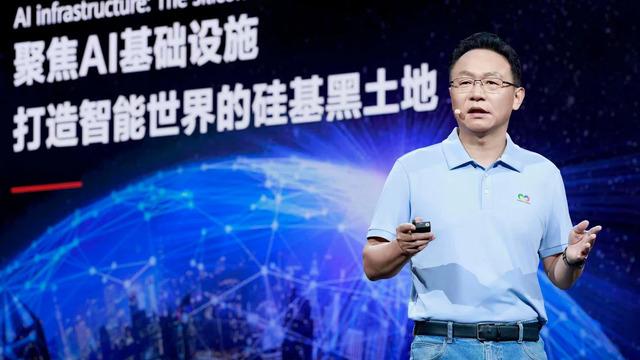
As the data and processing power requirements of artificial intelligence models increase day by day, next-generation solutions responding to this massive need continue to emerge from the hardware world. In this context, Chinese technology giant Huawei has announced its new hardware architecture aimed at easing the infrastructure load of large language models and complex artificial intelligence projects. Developed with high data processing capacity, this new system has managed to attract attention in the industry.
The newly introduced supercomputer infrastructure, named Atlas 960E SuperPoD, is designed to manage massive datasets and compute-intensive AI workloads from a single center. Going beyond standard server configurations, this structure can initially operate 4,096 AI-focused processors simultaneously within a single system. This integration minimizes latencies in data communication between hardware components, thereby maximizing computational efficiency.
One of the most striking technical features of the system is its ability to reach massive scales thanks to its modular structure. Beyond single installations, this infrastructure can be interconnected in clusters, expanding to a total of 1 million processors. Such a massive processor capacity holds the potential to consolidate the immense hardware power required for training tomorrow's much more comprehensive AI models with billions of parameters under a single ecosystem.
In summary, this new supercomputer architecture introduced by Huawei redefines the limits of scalability in the AI hardware market, bringing a fresh perspective to big data processing workflows.
Atlas 960E SuperPoD Architecture
The newly introduced supercomputer infrastructure, named Atlas 960E SuperPoD, is designed to manage massive datasets and compute-intensive AI workloads from a single center. Going beyond standard server configurations, this structure can initially operate 4,096 AI-focused processors simultaneously within a single system. This integration minimizes latencies in data communication between hardware components, thereby maximizing computational efficiency.
Scalability Up to 1 Million Processors
One of the most striking technical features of the system is its ability to reach massive scales thanks to its modular structure. Beyond single installations, this infrastructure can be interconnected in clusters, expanding to a total of 1 million processors. Such a massive processor capacity holds the potential to consolidate the immense hardware power required for training tomorrow's much more comprehensive AI models with billions of parameters under a single ecosystem.
In summary, this new supercomputer architecture introduced by Huawei redefines the limits of scalability in the AI hardware market, bringing a fresh perspective to big data processing workflows.